Relieve PMS naturally
Summary
Summary
Since the taboo surrounding women's menstruation has been lifted, a whole new world has opened up to us: that of menstrual disorders and imbalances. We are finally hearing about premenstrual syndrome, premenstrual dysphoric disorder, endometriosis, polycystic ovary syndrome, and many others. This often allows women to put a name to their ailments, feel less alone, and begin a course of treatment. These diagnoses are made by a healthcare professional, although sometimes it takes several years of medical wandering, unfortunately, as these ailments are still too little known.
An article by Marion Pezard, naturopath and producer of the Healthyliving Podcast
Premenstrual syndrome, commonly known as PMS, encompasses more than 200 symptoms that appear in the days leading up to menstruation but can sometimes last for several weeks for some women. These symptoms include mood swings, irritability, fatigue, headaches, food cravings, digestive problems, skin problems, water retention, etc.
It should be noted that some women also experience pre-ovulatory syndrome, or POS, which causes them to experience some of these symptoms at the time of ovulation and which has other causes that are still being explored.
Different types of PMS have been identified, allowing us to specify the symptoms and feelings experienced by each woman.
Of course, it is not uncommon to identify with several of these categories.
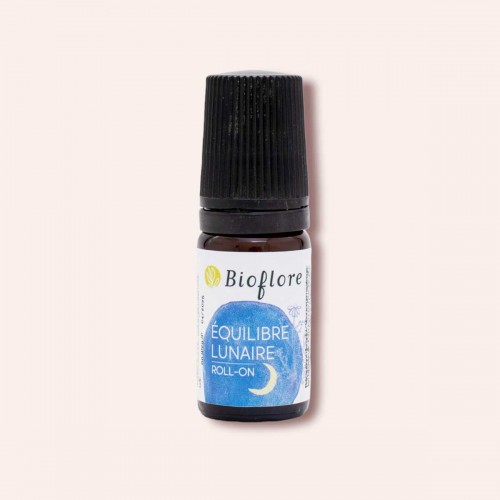
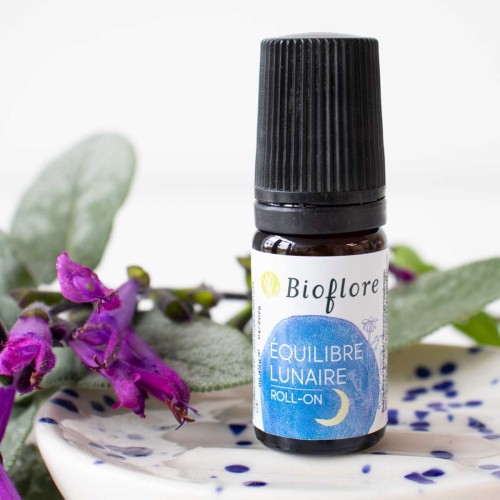
Bioflore's ready-to-use solution for PMS A & D: the Cycle Support Roll-on to calm anxiety, irritability and feelings of depression.
Cycle Support Roll-on - organic
PMS without problems
Sometimes, this famous PMS seems extremely present and is accompanied by a strong focus on mental and emotional balance, with symptoms of temporary depression that subside when menstruation begins. This is known as premenstrual dysphoric disorder, or PMDD, and it is possible to seek more intensive treatment from healthcare professionals who are aware of this condition and to receive allopathic treatment through them if necessary.
To effectively alleviate premenstrual syndrome, it is essential to understand its root cause. This is hormonal and indicates an imbalance between the two key hormones of the menstrual cycle: oestrogen and progesterone.
Oestrogen levels rise throughout the pre-ovulatory phase until they trigger ovulation by activating an LH surge. They are then replaced by progesterone, which takes over during the post-ovulatory phase. PMS occurs when there is an absolute or relative lack of progesterone.
Several causes can lead to this imbalance, which are often intertwined and therefore require a comprehensive approach to each woman's lifestyle and balance.
The digestive system is closely linked to hormonal balance because it is responsible for eliminating hormones that are no longer useful in the body. For example, after ovulation, oestrogen must be eliminated after reaching its peak. The liver then breaks it down into metabolites and eliminates it from the body via the stools. However, if the intestinal barrier is damaged (known as leaky gut syndrome) or if transit is slowed down, these metabolites will be reactivated and re-enter the bloodstream. This will result in excessive oestrogen saturation relative to progesterone, which will be in relative short supply.
Our current lifestyles tend to be very stressful and put our bodies into survival mode, which means that only our body's vital functions are prioritised. As we know, the purpose of the menstrual cycle is reproduction, but since reproductive functions are not vital, they tend to take a back seat.
This has an even greater impact on progesterone, the post-ovulatory and pregnancy hormone, which is produced from the same source as cortisol, the stress hormone, called pregnenolone. In cases of significant stress, all of this raw material will go to cortisol, which is vital, and will penalise the production of progesterone, which is not vital.
Finally, sometimes ovulation is not optimal and this affects the post-ovulatory phase, progesterone production and therefore leads to PMS.
During the first part of the cycle, a follicle surrounding the egg matures until ovulation occurs. Once the egg cell is expelled, a residue of this follicle remains in the ovary and forms what is known as the corpus luteum. This is responsible for producing progesterone.
It is therefore understandable that if the follicle is not properly produced, progesterone production will be lower even if ovulation has taken place.
It can also happen that hormones are perfectly balanced but that significant inflammation disrupts the receptors for these hormones, preventing them from acting as they should.
This information may seem a little technical, but these are the main causes that it is recommended to explore in order to tackle the issue head-on and alleviate PMS symptoms in the long term.

As you can see, the key advice is to go back to the root cause of the problem in order to treat the imbalance at its source. With these explanations and by learning to observe your cycle using methods such as symptothermal contraception, you will be able to identify the areas you need to focus on: improving digestion, reducing stress, supporting ovulation, modulating inflammation, etc.
Don't hesitate to seek help to clearly identify the causes that apply to you.
In addition, here are a few tips to explore to provide relief when the time comes.
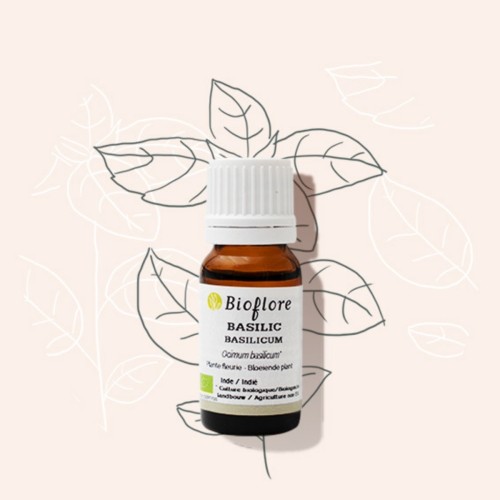
In case of lower abdominal pain, bloating, or digestive difficulties, it is recommended to perform a self-massage with basil methyl chavicol and litsea essential oils to calm spasms and decongest the area.
Mix one drop of each essential oil in a tablespoon of castor oil and massage your stomach in a circular motion clockwise, covering the whole lower abdomen.
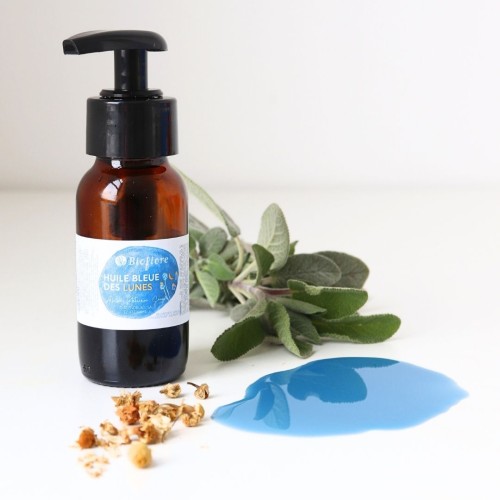
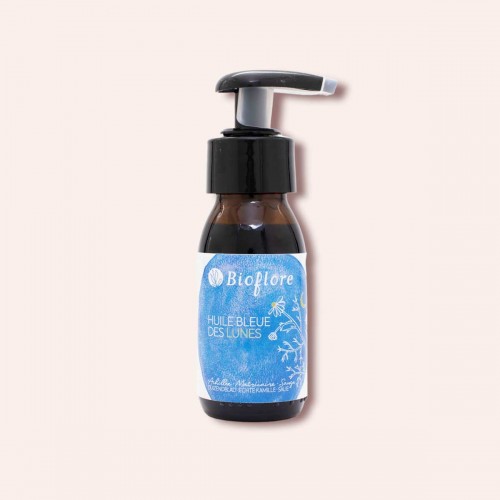
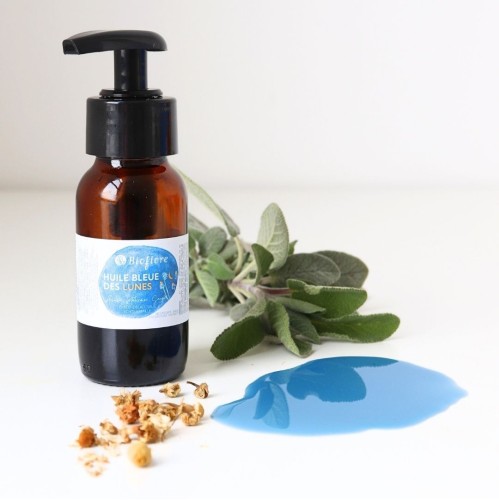
Bioflore's ready-to-use solution: the "Lunes" blue massage oil, which contains Listée essential oil, to be massaged onto the lower abdomen.
Depending on your needs, you can create your own custom infusions using the various plants listed below.
Two tablespoons of herbs per cup is the ideal dose, up to three cups per day.
Certain plants will also be very useful alongside herbal teas, depending on your needs.
Do not hesitate to take advice on which ones are best for you and use them at the right time in your menstrual cycle.
Our allies for many female ailments are once again very useful: derivative baths and hot water bottles.
You can place a small ice pack on the perineum to help decongest and reduce inflammation in the area, and at the same time place a hot water bottle on the liver to support its work in detoxifying hormones.
It is a good idea to add as much fibre as possible to your meals, as well as ground flax seeds to support the elimination of oestrogen.
You should also make sure you stay well hydrated and limit inflammatory foods, especially during the post-ovulatory period: coffee, sugar, alcohol, dairy products, refined foods.
You can also add evening primrose oil, either in liquid form to your meals or as a supplement in capsule form, to support progesterone production.
remember to take care of yourself during these periods, lighten your schedule if you can, take time to relax, walk, do yoga, meditate—in short, take care of your emotions and stress levels.