Thinner skin, dark circles, puffiness: understanding the importance of eye care and the right natural ingredients.
The skin around the eyes is among the thinnest and most stressed on the face. Dehydration, dark circles, puffiness and fine lines appear there quickly. Do we really need a specific skincare product for this delicate area? Which natural active ingredients, hydrosols, plant oils or essential oils are suitable… and safe to use? Let’s take a closer look.
Written by Rachel Dipinto
The eye area: a particularly delicate area of skin
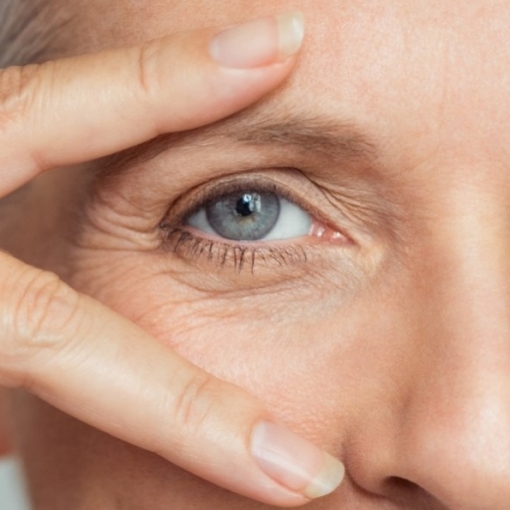
The eye area is one of the most delicate parts of the face. The skin here is particularly thin: its thickness is often estimated at between 0.3 and 0.5 mm, which is several times thinner than that of the rest of the face. This thinness is due to a different skin structure: the epidermis is thinner, the hydrolipidic film is less pronounced and the supporting tissue is less dense.
Added to this is a low density of sebaceous glands. These glands normally produce sebum, which helps to protect the skin and keep it supple. Their scarcity in this area therefore makes the eye contour more vulnerable to dehydration, early fine lines and signs of fatigue.
The eyelids play a role in protecting the eye: they help to cleanse the surface of the eye. Blinking, which occurs several thousand times a day, thus maintains the eye’s hydration and protection.
Eyelashes also play a part in this defence system. They act as a natural barrier by limiting the entry of dust, particles and micro-debris into the eye.
This explains why skincare products for the eye area must be chosen with care. Textures that are too rich or too occlusive can sometimes weigh down the area, encourage fluid retention and accentuate the appearance of under-eye bags. Light textures and ingredients with good skin absorption therefore become important criteria.

The use of highly concentrated active ingredients, such as certain essential oils or plant oils, also requires caution. The immediate proximity to the eye necessitates strictly controlled formulations and dosages that are rigorously adhered to in order to avoid any risk of irritation or sensitisation.
It is particularly for this reason that eye contour care products are generally specifically formulated. Their development is based on tolerance tests and the selection of ingredients suited to this sensitive area. Products developed by cosmetics professionals take these constraints into account to ensure safe use near the eye.
Can you apply your face cream to the eye area?
This question comes up often. In most cases, it is possible to apply facial skincare products around the eyes, as long as you do so correctly.
Cosmetic formulas designed for the face are generally formulated to be used near the eyes. Manufacturers take this sensitive area into account when developing products to avoid ingredients that are too irritating or incompatible with this part of the face. However, the skin has an interesting mechanism known as the skin’s capillary effect. When a skincare product is applied to the face, it can gradually migrate slightly towards neighbouring areas, particularly the eye contour.
It is precisely for this reason that it is often unnecessary to apply an extra amount of skincare product directly to the eye area. The product applied to the cheekbones or around the eye orbit will naturally spread towards this more delicate area. Applying more product can therefore lead to over-application, which can sometimes accentuate a feeling of heaviness or contribute to the appearance of puffiness.
The recommended technique is simply to sweep the face cream up to the orbital bone, then gently dab the area with the excess product remaining on your fingers, without adding any more.
However, if the product clearly states that the eye area should be avoided, this instruction must be followed. Certain active ingredients, which are more concentrated or exfoliating, are not suitable for this particularly sensitive area.
What if the eye area finally had the answer?
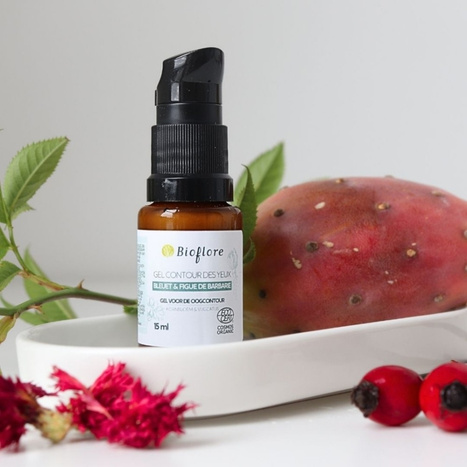
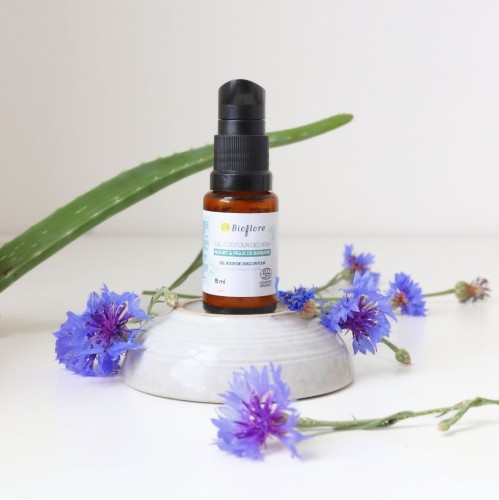
To address this, Bioflore released a new floral eye contour gel, specially formulated to respect the delicacy and sensitivity of this area.
What makes it unique is its base, which is composed of hydrosols rather than water, including cornflower hydrosol, traditionally prized for soothing and refreshing tired eyes. The formula is also enriched with floral extracts, aloe vera gel (Aloe barbadensis) and hyaluronic acid (sodium hyaluronate) to provide hydration and comfort to the eye contour area.
Its fresh, lightweight gel texture doesn’t weigh the skin down and is easy to apply morning and evening. A skincare product designed to care for the eye area every day, whilst respecting the delicate nature of this unique part of the face. Ideal for spring and/or summer.
A closer look at the key ingredients of Bioflore's eye contour care
● Provins rose extract (Rosa gallica flower extract), a iconic variety grown in Europe, is notable for its high content of polyphenols and flavonoids, which are recognised for their antioxidant properties. When applied to the eye area, this extract helps to visibly smooth the skin, restore radiance to the eyes and reduce the appearance of fatigue. It also helps reduce dark circles by modulating the activity of VEGF (Vascular Endothelial Growth Factor), a factor involved in the formation of microvessels and therefore in the dark discolouration under the eyes. At the same time, it supports the structure of the dermal tissue, thereby promoting a firming effect and limiting skin slackening.
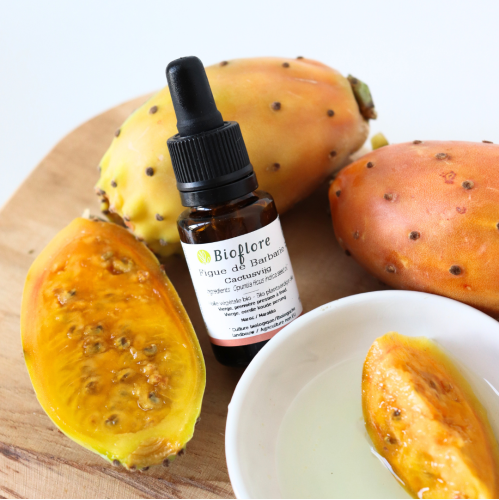
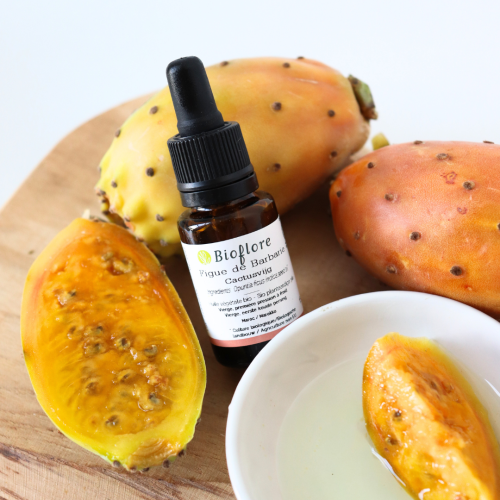
● The prickly pear, meanwhile, complements this action thanks to its high content of moisturising carbohydrates, essential fatty acids and antioxidants. It helps maintain optimal hydration in this delicate, fragile area, strengthen the skin barrier and improve skin suppleness, contributing to a smoother, fresher and visibly more rested eye contour.
Hydrosols and sensitive eyes: the simple remedy of soothing compresses
When your eyes are tired, irritated or slightly swollen, it is not always necessary to resort to complex treatments. In some cases, very simple remedies, drawn from traditional herbal medicine, can provide real relief. Among these, the use of hydrosols as eye compresses is one of the best known.
First and foremost, some people have heightened eye sensitivity: allergic reactions or recurrent infections. In these situations, caution is always advised. A hydrosol that is well tolerated by most people may not be suitable for everyone. It is therefore not a universal solution, but a soothing remedy that may be suitable for many people.
Why certain hydrosols are preferred for eye care
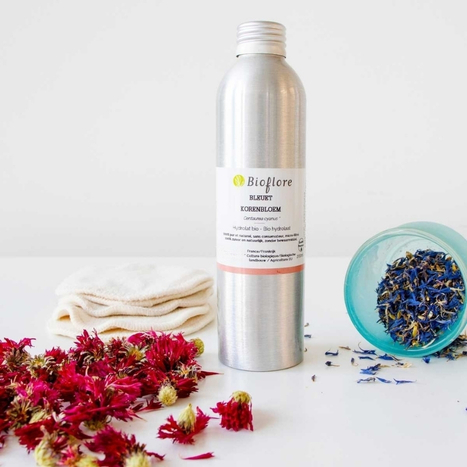
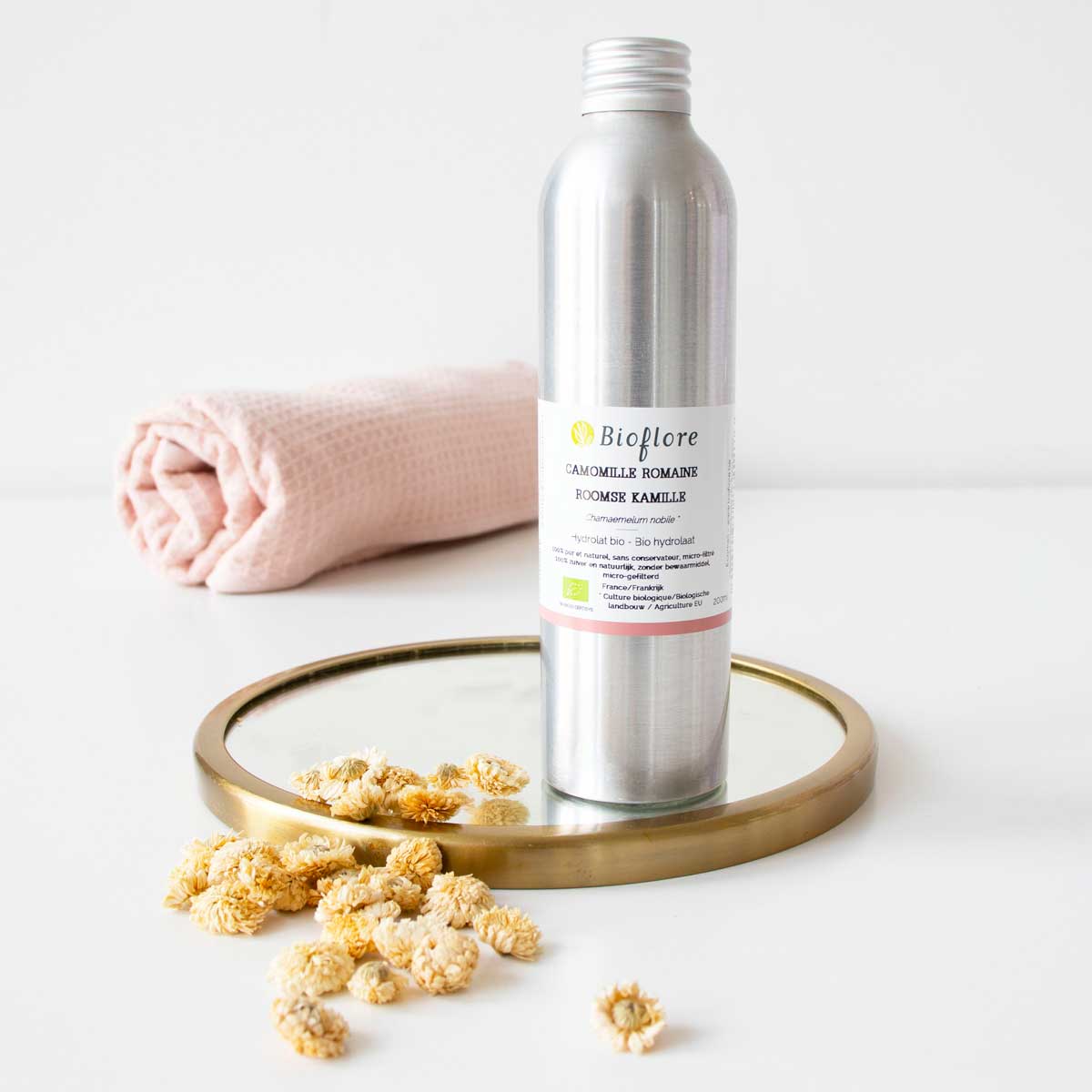
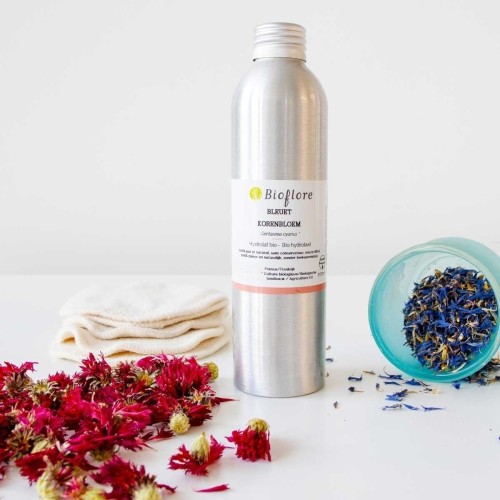
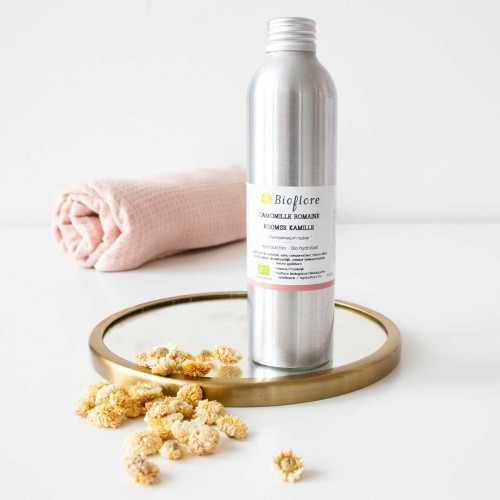
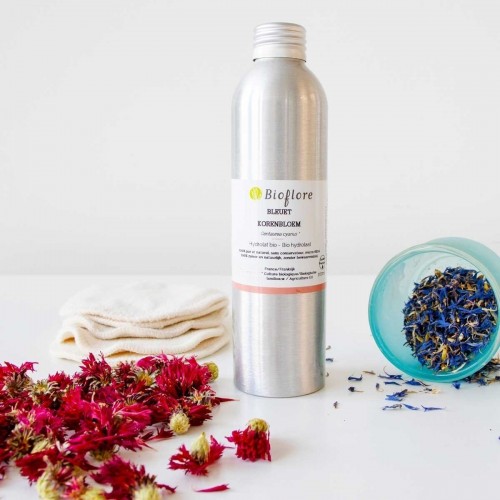
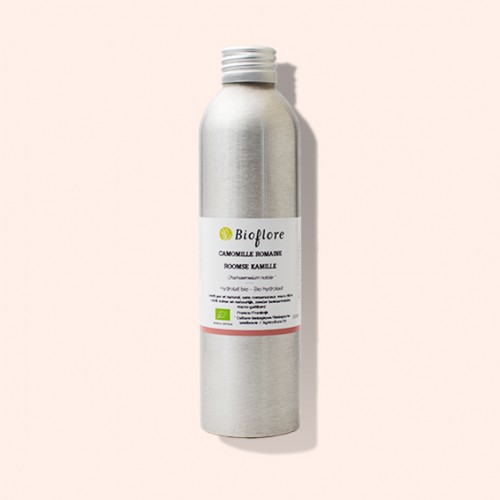
Two floral hydrosols are traditionally used for eye care: cornflower hydrosol (Centaurea cyanus) and Roman chamomile hydrosol (Chamaemelum nobile).
Cornflower hydrosol: a traditional remedy for tired eyes
The cornflower is an annual herbaceous plant recognisable by its deep blue flowers. It grows naturally in parks, cereal fields and meadows. In folk tradition, it was already used as an infusion or macerate to soothe tired and irritated eyes.
Cornflower hydrosol is obtained by steam distillation of the flowers. It contains a very gentle fraction of the plant’s aromatic compounds as well as water-soluble molecules. This form is particularly useful as it is much gentler than essential oils, making it suitable for use near the eye area.
Roman chamomile: a soothing plant for the eye area
Roman chamomile is another well-known plant in traditional medicine. It produces small, highly aromatic white and yellow flowers. It is traditionally used for its soothing and calming properties, whether in herbal teas, cosmetics or dermatological preparations.
As with cornflower, Roman chamomile hydrosol is obtained through distillation. It is valued for its soothing and calming effect, particularly when the skin or mucous membranes are sensitive.
These two plants are not, in fact, found solely in traditional cosmetics. They are also found in certain eye drops and eye solutions available in pharmacies.
Blueberry or chamomile compresses: a simple remedy for tired eyes
The simplest way to make the most of their properties is to use them as compresses.
The first step is to choose a clean base. This could be:
- sterile compresses from a pharmacy,
- make-up remover pads,
- or a clean, freshly washed piece of fabric (for example, a piece of cotton from an old T-shirt, to reduce waste).
The key point is that the material used must be perfectly clean to prevent any contamination.
The compresses are then generously soaked in cornflower or Roman chamomile hydrosol, and gently placed over closed eyes.
To enhance the soothing effect, you can keep the bottle of hydrosol in the fridge. The coolness provides an additional decongestant effect and can help reduce feelings of tiredness or the appearance of puffiness.
Once the compresses are in place, simply leave them on for 10 to 20 minutes, whilst sitting or lying in a comfortable position. This moment can simply become a relaxing break: close your eyes, rest and let the coolness of the hydrosol work its magic.
Seeing clearly… as far as the eye can see
Caring for the eye area ultimately means addressing several needs at once: moisturising the thinner skin, smoothing the appearance of fine lines, helping to reduce puffiness and dark circles, whilst preserving what gives the face its beauty and expressiveness: the eyes.
With this in mind, Bioflore’s Eye Contour Gel; the cornflower and Roman chamomile hydrosol, fits easily into a daily routine.
Because, ultimately, caring for this area simply means allowing the eyes to remain clear, rested and expressive. And why not preserve, over time, that famous doe-eyed… or cat-like gaze, which catches the light and says so much without a word.