Ah, our hair – it’s quite a story! Don’t they say that cutting your hair or ‘changing your look’ always marks a fresh start in our lives?
Because, yes, our hair is very often an integral part of our identity, so when it’s in poor health, it can cause us far more worry than we might have imagined.
Did you know, by the way, that 60% of the world’s population will experience hair loss at some point in their lives?
So here’s a brief overview of hair health to give you the tools to pamper your hair.
An article by Marion Pezard, naturopath and producer of the Healthyliving Podcast
What is hair made of?
A hair is mainly composed of proteins, most notably the best-known one, called keratin. Whilst 85 to 90% of a hair is made up of proteins, the remaining 10 to 15% is water, followed by 1 to 5% lipids.
There are also other, less significant components such as minerals, trace elements and the pigment that gives the hair fibre its colour.
What is the hair growth cycle?
Hair goes through four main phases throughout its life cycle, each of which plays a specific role.
The first phase, known as the anagen phase, is the main phase of hair growth.
It accounts for 85 to 90% of hair and can last from 2 to 7 years, depending on the body’s overall balance.
It is estimated that during this phase, the hair grows actively (≈ 1 cm/month). The follicle is then deeply anchored, and the longer this phase lasts, the longer the hair can grow.
In some cases, such as an androgenic imbalance, this phase is shortened, resulting in shorter and finer hair.
The second phase is the catagen phase, or transition phase.
It lasts between 2 and 3 weeks and affects only 1% of the hair.
During this phase, growth stops and the hair follicle retracts to prepare for the next stages.
The third phase is a resting phase known as the telogen phase, during which the hair is still present but no longer grows.
The follicle prepares to produce a new hair. It lasts 2 to 3 months and affects 10 to 15% of the hair.
Finally, the fourth phase is known as the exogen phase or shedding phase.
This is when the hair falls out naturally and is replaced by a new hair.

Why do we lose our hair?
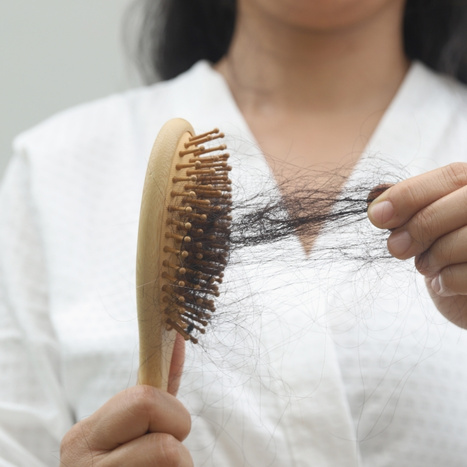
It is estimated that normal hair loss amounts to between 50 and 100 hairs per day. Anything above this may indicate a specific problem, and there are many possible causes for this excessive hair loss:
- Micronutrient deficiencies (zinc, iron, B vitamins, etc.)
- Macronutrient deficiencies, particularly protein
- Circulatory problems affecting microcirculation in the scalp and therefore its nourishment
- Hormonal disorders: hypothyroidism, hyperandrogenism
- Postpartum
- Weakening of the hair caused by heat-styling tools (straighteners, curling irons, etc.)
But have you noticed that, more often than not, hair falls out some time after the event that may have weakened it (summer sun and swimming, emotional stress, illness, pregnancy, etc.)?
This is because, in these specific cases, the hair is forced into the telogen phase and will therefore remain there for 2 to 3 months before falling out. This explains why we lose far more hair in the autumn following damage caused by the sun and summer swimming, or why we tend to lose hair 2 to 3 months after a period of stress.
In the case of postpartum hair loss, the situation is somewhat different because the very high levels of oestrogen during pregnancy trap the hair in the telogen phase and prevent it from subsequently entering the shedding phase. There will therefore be an accumulation of hair in this phase, which will then all enter the shedding phase at the same time, around 2 to 3 months after the drop in oestrogen levels following childbirth.
This can be quite alarming or even worrying at the time, but it is entirely normal and the hair will grow back naturally. The only thing to do is to ensure you provide it with the right nutrients and, if necessary, give it a little boost with herbal remedies.
Nutrients essential for healthy hair
The health of your hair reflects your overall health, and to maintain it, you need a number of vitamins and minerals that can easily be incorporated into your diet.
- Vitamin B8 – strengthens hair, reduces breakage
Eggs, almonds, sweet potatoes, bananas - Vitamins B6, B9, B12 – keratin production and hair oxygenation
Green vegetables, eggs, meat, whole grains - Vitamin D – stimulates hair follicles
Oily fish, eggs, exposure to sunlight - Iron – oxygenation
Red meat, spinach, chickpeas, lentils + vitamin C for absorption - Zinc – hair growth and sebum regulation
Oysters, pumpkin seeds, walnuts - Omega-3 – hydration and scalp comfort
Oily fish, avocado, walnuts, flaxseed, chia seeds - Silicon – contributes to keratin synthesis
Wholemeal grains, green vegetables, bananas, horsetail
At the same time, it is important to limit processed or manufactured foods, as well as sources of oxidative stress such as alcohol, tobacco and sugar, and instead focus on antioxidants (green tea, ginger, turmeric, red berries, etc.) and to manage stress as much as possible.
My favourite plants for the hair
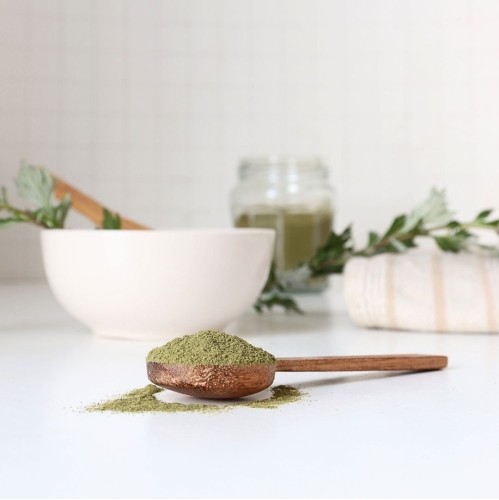
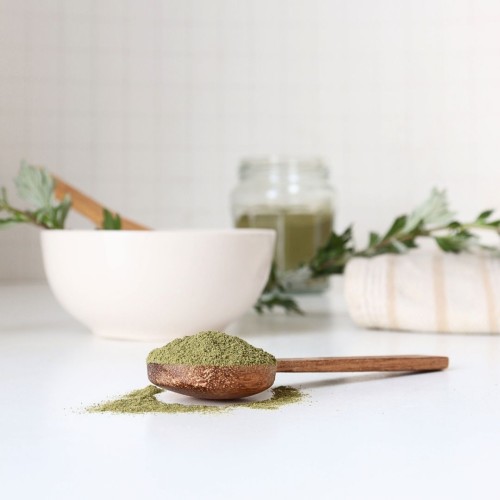
- Nettle: drink it as a herbal tea, use it in powder form in scalp masks to create a poultice, or steep it in vinegar and dilute with water to make a hair rinse. It has excellent remineralising properties and is very beneficial for hair health. You can also opt for other remineralising plants such as horsetail or peppermint in herbal tea.
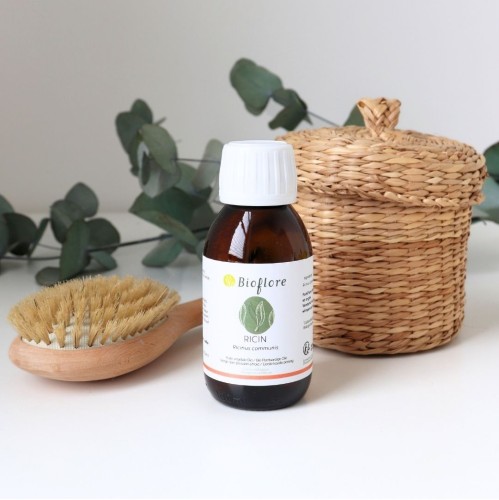
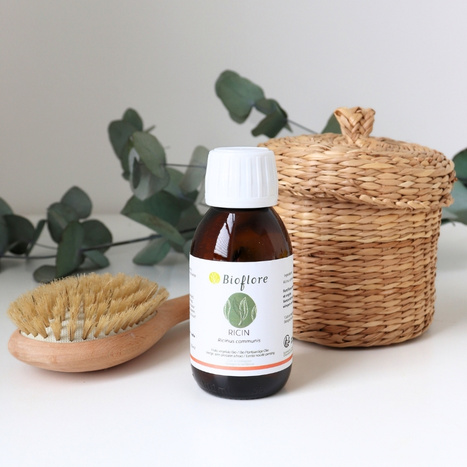
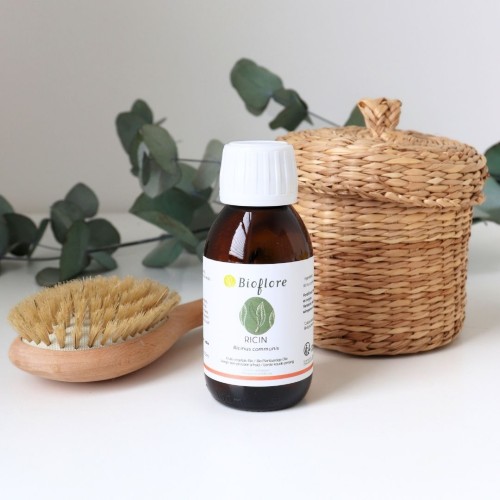
- Castor oil, specifically for promoting hair and eyebrow growth.
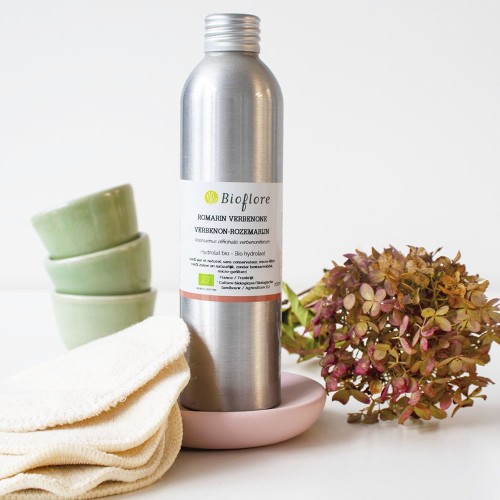
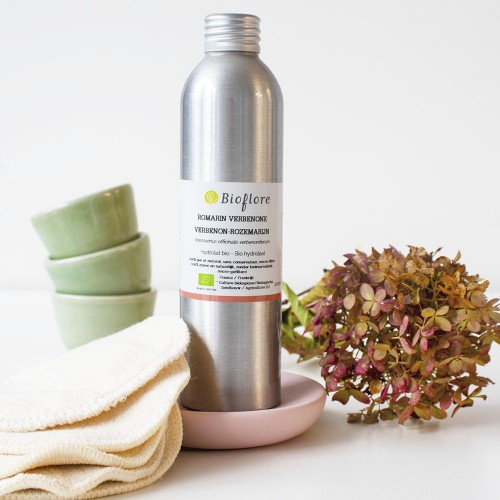
- Rosemary, to be used as a hydrosol on the scalp to support growth and also added as an essential oil to your shampoo or hair mask.
- Marshmallow: its root is widely used in hair masks for its coating properties and the shine it imparts.
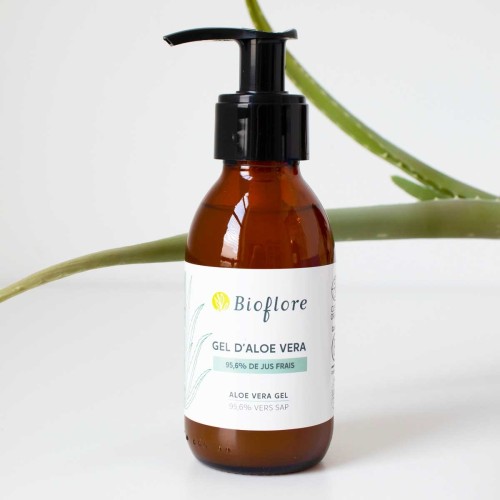
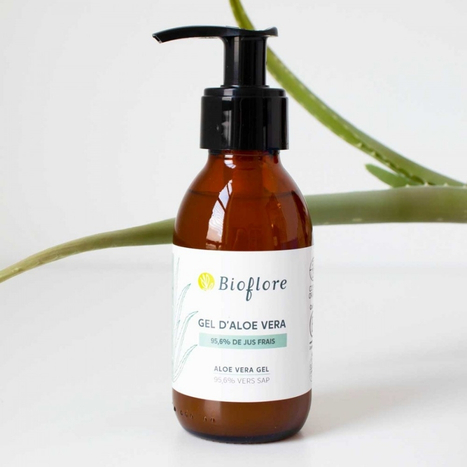
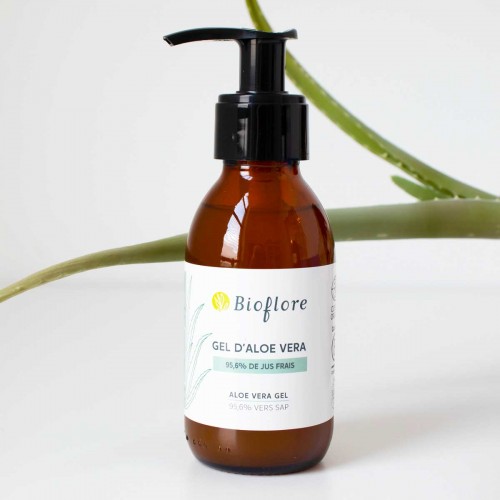
- Aloe vera, whose gel is well known for curly or dehydrated hair as it helps retain moisture whilst helping to form beautiful curls or waves.
A closer look at common issues
Hair loss
To minimise hair loss, alongside a balanced diet and a healthy lifestyle, you can apply a pre-shampoo treatment and massage it into the scalp using a small, specially designed bristle brush to stimulate local microcirculation and nourish the hair follicles.
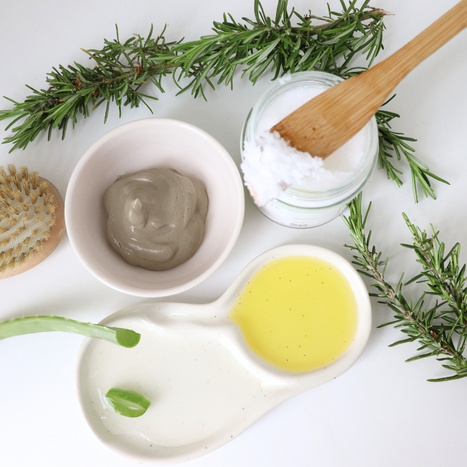
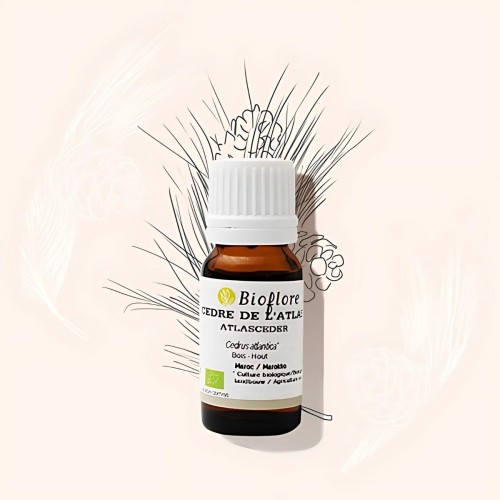
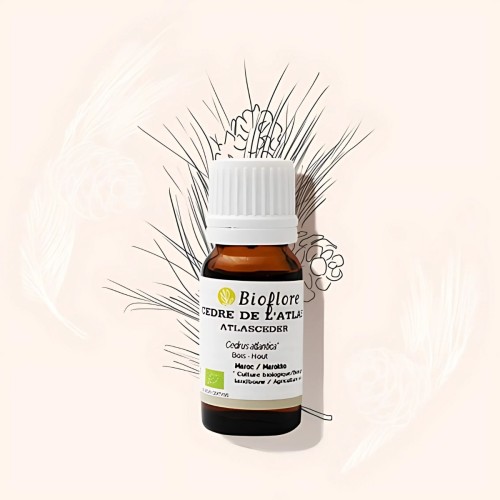
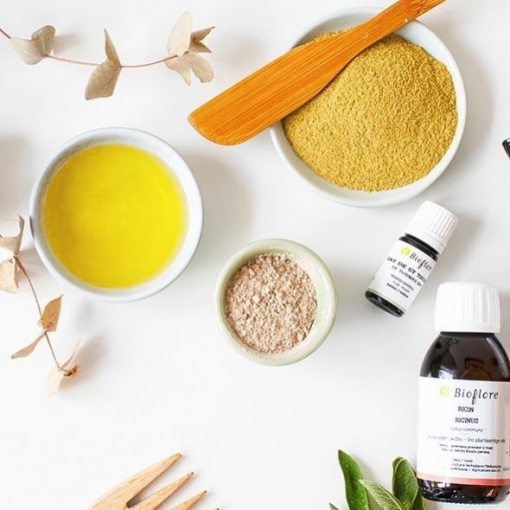
In a tablespoon of castor oil, add 5 drops of verbenone rosemary essential oil, 3 drops of tea tree essential oil and 2 drops of Atlas cedar essential oil. Apply this mixture to the scalp, massage in and leave for about ten minutes before shampooing.
Dandruff and a sensitive scalp
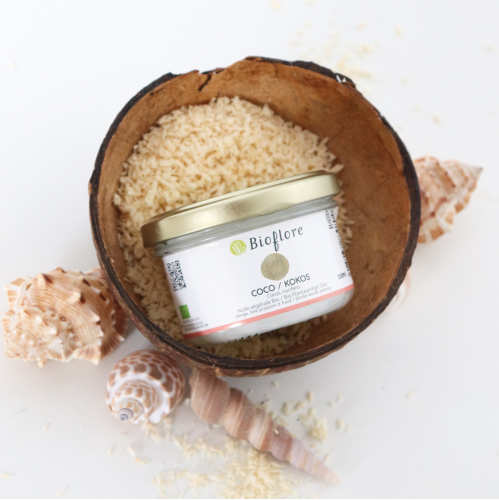
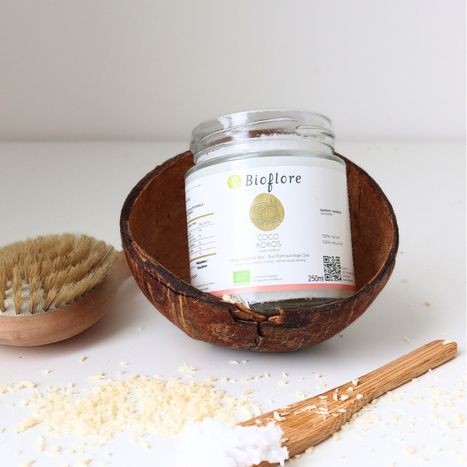
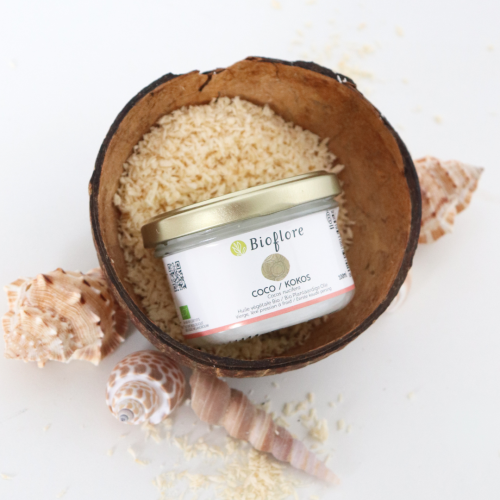
In this case, I recommend the same pre-shampoo treatment, but using coconut oil instead of castor oil, as it has antifungal properties that can be very useful in certain cases.
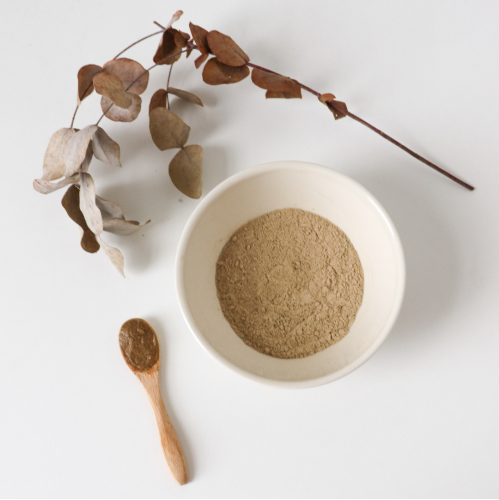
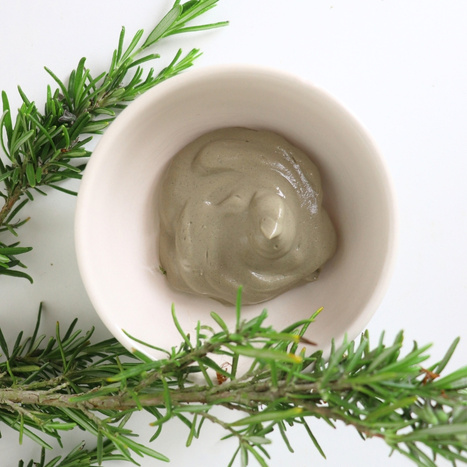
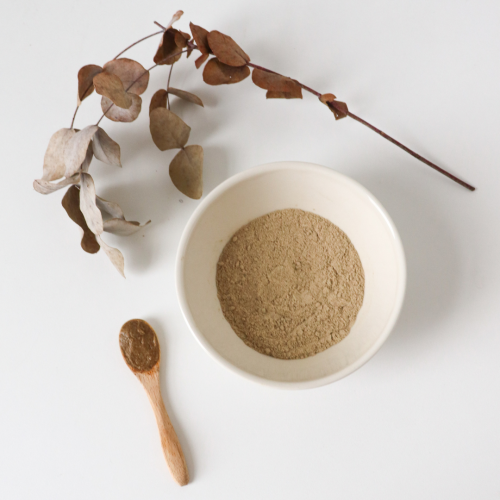
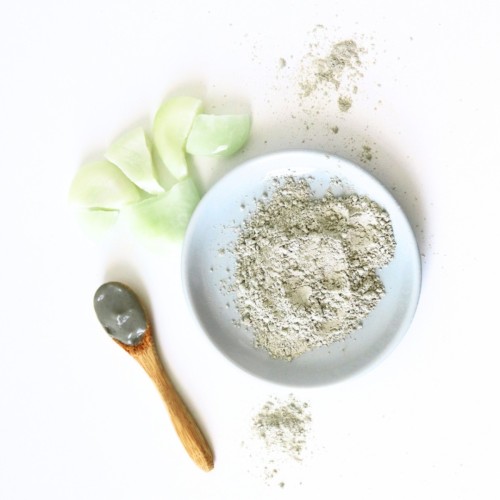
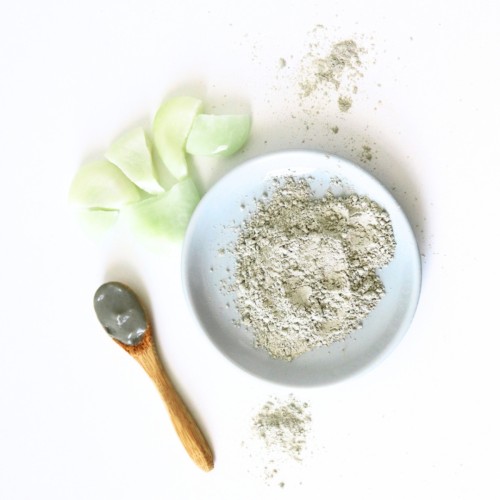
You can then apply a green clay mask to the scalp before moving on to your shampoo, to which you should add 20 drops of fine lavender essential oil and 10 drops of rosemary verbenone essential oil per tablespoon of neutral shampoo. Then work it into a lather with your fingertips to thoroughly stimulate the scalp.
If your scalp is neither irritated nor dry and your dandruff is quite oily, you can occasionally exfoliate your scalp using, for example, a vegetable oil of your choice mixed with sugar granules to form a paste.
If your scalp tends to itch, you can apply a small amount of aloe vera gel between washes to soothe it without making the hair roots greasy.
Oily hair
If your scalp tends to get greasy quickly between washes, it’s a good idea to start with a clay mask on the scalp, mixed with 5 drops of rosemary verbenone essential oil and 5 drops of tea tree essential oil, before rinsing with clean water in the shower and moving on to shampooing.
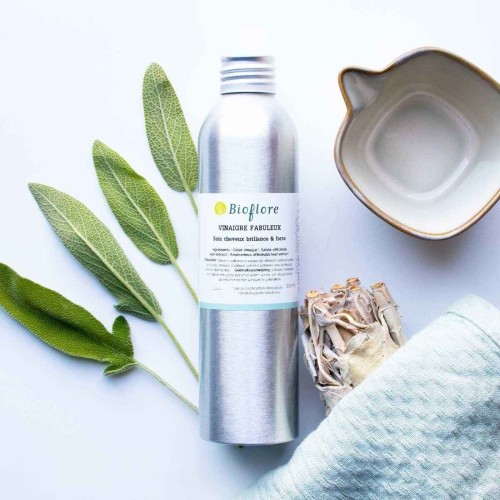
After shampooing, you can apply a rinse made up of equal parts filtered water and apple cider vinegar. Apply it directly to the scalp and do not rinse it out. If possible, you can even soak nettle leaves in your vinegar for 3 weeks before diluting it with water and storing the mixture in a bottle with a pipette for easy use in the shower.
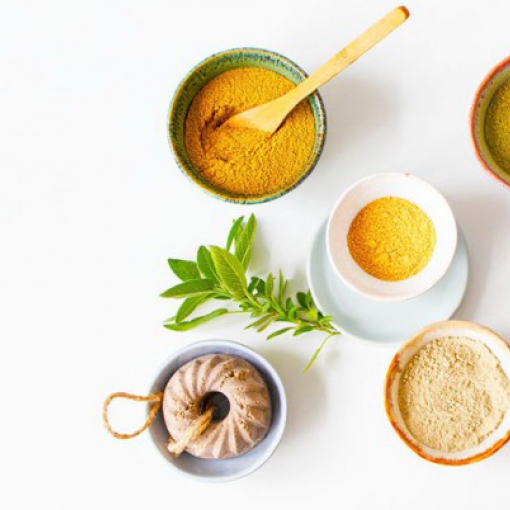
You can also try spacing out your washes by spraying rosemary hydrosol onto your scalp every day and, if necessary, using white clay powder between washes to help absorb excess sebum from the scalp. Apply it to the scalp with a brush, then after 10 minutes, brush your hair with your head upside down to remove any excess.
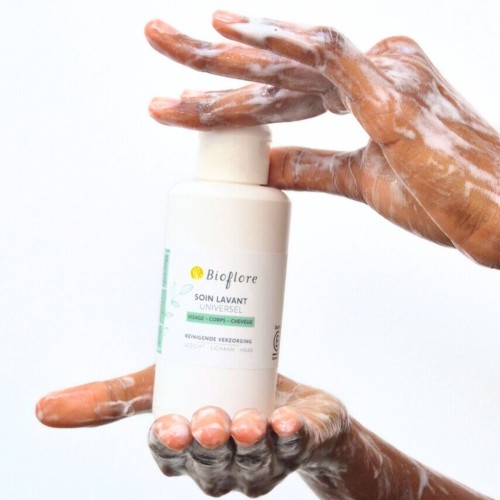
Also make sure to choose a gentle shampoo to avoid irritating the scalp, which might produce even more sebum as a protective measure.
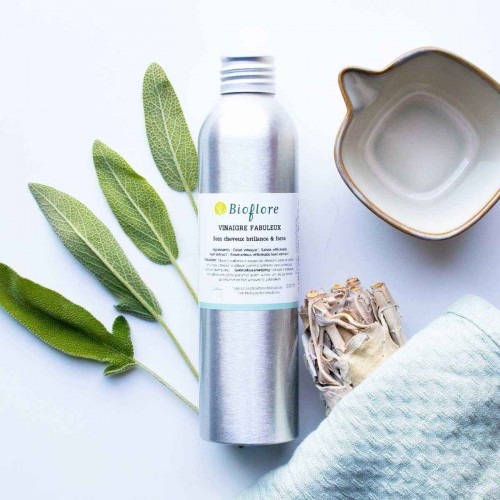
Bioflore’s ready-to-use solution: The Fabulous Vinegar, our hair vinegar infused with rosemary and sage from our garden
Thin and brittle hair
If your hair is thin and brittle, start by avoiding or limiting the use of heat-styling tools, as these can weaken it.
Then, once a week, apply a mask made from marshmallow root powder to the lengths of your hair before shampooing.
You can also opt for oil treatments using castor oil, coconut oil, shea butter or mango butter, leaving them in overnight under a towel to thoroughly nourish the lengths.
A handy tip for rinsing it out properly: apply your shampoo to your oil-coated hair before even wetting it, then add a little water to work it into a lather.
Finally, you can protect your hair by applying aloe vera gel and a few drops of jojoba oil to the lengths before your hair dries completely; this will help protect it and retain its moisture.
You now have a whole range of solutions at your fingertips to look after your hair naturally! Now it's your turn!